
A Whisper of History: Ancient Materials, Modern Sanctuary
I was completely opposed to drywall.
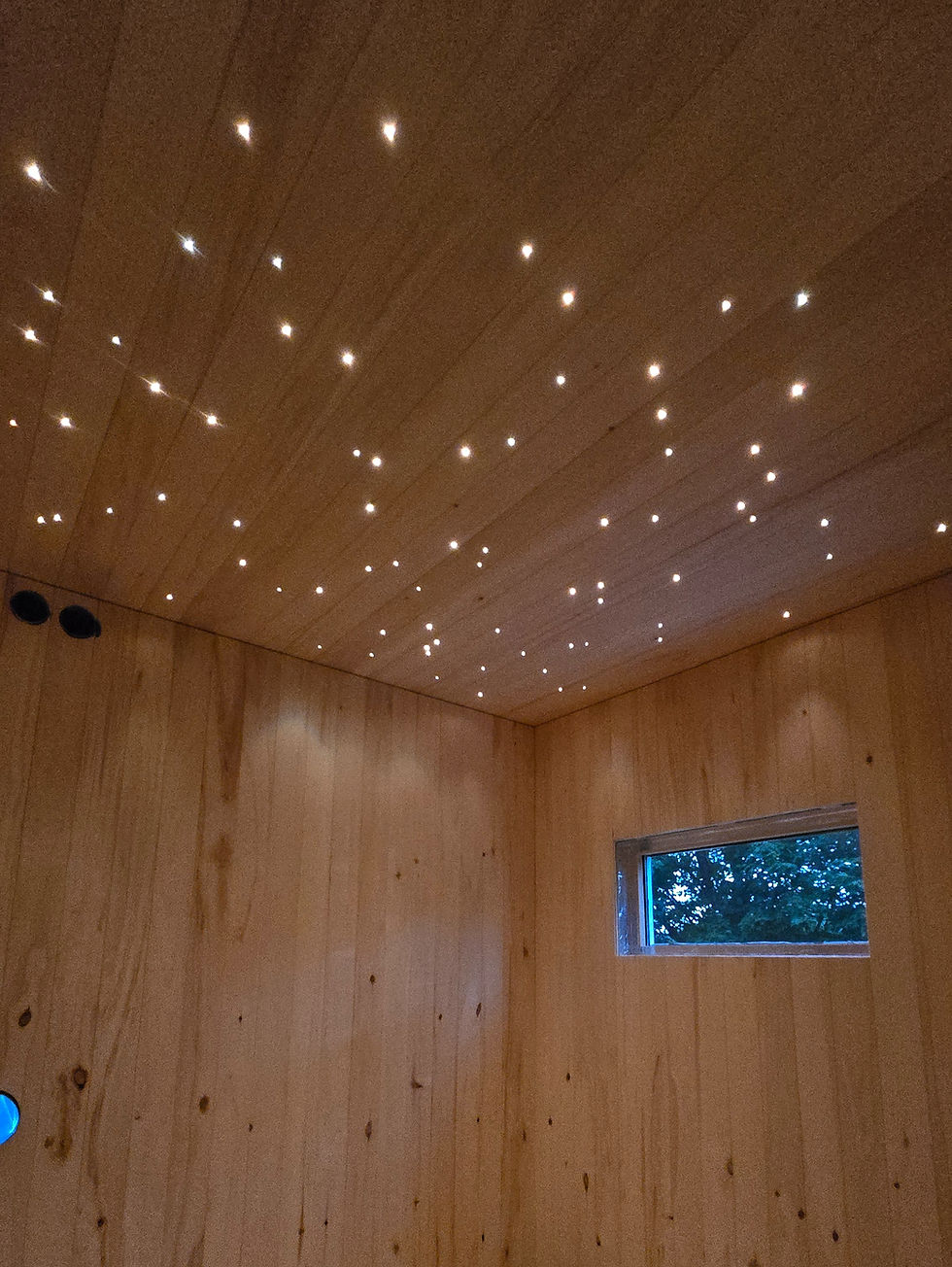
I had imagined something completely different for the antechamber. I dreamed of Scandinavian-inspired plywood, finished with a botanical shade stain. A truly biophilic interior design, capturing the grain of the wood. An unexpected texture that would bring the feeling of the forest inside. But we couldn't quite nail down the plan. I didn't have complete confidence in the execution, and I feared it would end up looking like the inside of a shed. Not the vibe we want.
I felt forced back to drywall. It felt soulless, like cutting a corner when everything else had been so considered. It sat heavy with me.
But I'm tenacious if nothing else, and I couldn't let it go.
I started researching finishes and paints that married sustainability with beauty and character. What I found were mineral finishes and limewash. I wasn't looking for a trendy paint treatment. I was looking for a material with a story and vitality. Something that could take an ordinary, modern wall and transform it into something with spirit, that je ne sais quoi.
Lime plaster and finishes appear throughout ancient Mediterranean
architecture. The Greeks used lime plaster to create architectural relief and monumental surfaces. The Romans took it much further, building entire visual worlds on plaster: marble, columns, landscapes, gardens, mythological scenes. Their walls weren't merely painted; they were an intrinsic part of the architecture.
Lime also became part of the language of sacred spaces. For centuries, it was used in churches, chapels, castles and cathedrals, where its soft, luminous surface could coexist with old plaster and masonry. And then there were the baths. The Romans understood something about bathing that has withstood the test of time: water, heat, stone, light and time can transform a simple room into something restorative. Lime transforms the finish of a plain, pedestrian wall back into a texture-rich stone, that can breathe.
For the first time, I felt inspired by what we could do with drywall.
The antechamber is where you first enter woodsmoke. This is where you leave your things, ready yourself for the sauna, and begin to put down the weight of the day. From here, you enter the heat.
When you emerge, you come back through this same room before stepping into cold water or the sharp breath of a winter breeze. You return again to reset. Maybe you sit for a while. Maybe you turn around and go straight back into the heat.
The antechamber lives between extremes.
It is the top of the breath, and the bottom; outside and in;

arriving and leaving. It is a place to find your center before you move toward the next moment.
There is something fitting about the material itself: lime begins as limestone, is transformed by fire, and as it cures, it transforms to stone once again.
JH Wall Paints are made with mature pit lime and natural earth pigments, giving the finish depth and variation. Marrying the lime to the wall lets the lime “bloom,” creating the almost velvety quality that first caught my attention. It has a depth and luminosity that conventional paint doesn't have, and the hand of the person applying it gets imbued as texture in art.
Then comes the light.
The antechamber faces north, so the daylight is soft and diffuse. As the natural light changes throughout the day, the mineral pigments and subtle texture scatter the light differently, giving the walls a quiet luminosity and a tone that shifts with the sun.
And that is what finally changed my mind about the drywall. I wanted that. I wanted the walls to have a little life of their own.
I started this process convinced that drywall was a devastating compromise. Now I wonder if the lime has given us something better than the plywood I was so determined to have.
Something quiet, but not plain.
Something that belongs to this tranquil respite we're creating.
Warmly,


Comments