
The Third Place: a Homecoming
For most of human history, gathering wasn't something we had to schedule. It was a call: to fire, water, food, heat. Simple needs, provided for. A fire was enough. A well was enough. A market, a bath, a shaded bench in the village. And yet, fulfilling our basic needs wasn't all we did - we congregated.

Today, those places are harder to find. Homes are scattered across the countryside, or stacked together in elaborate complexes so dense that instead of creating community, they foster anonymity. We have meals delivered, the internet wired into our rituals, and church attendance sinks lower and lower. With everything at our fingertips, a world in a little box, why would we need to gather? We have things to do. We're entertained. Distracted. Overwhelmed with stimuli and simultaneously alone.
Places we once lingered have become places we pass through. Drive through. Click and collect. Even the café, once a kind of Renaissance salon for thinkers and philosophers to debate, read, play games, and enjoy performances, has become a place of complex customizations and mobile ordering. A place once rich with culture, innovation, and inspiration, reduced to a transaction.
So much of modern life is organized around moving us along. There are remarkably few places left where you can simply be.
In 1989, sociologist Ray Oldenburg wrote The Great Good Place as a canary in the coal mine, urging us to consider what convenience and progress might cost us. Suburban sprawl, car culture, and the twin fires of obligation at home and work burned at either end of the day, consuming the oxygen that once fed everything in between. He saw the places where we once gathered growing increasingly quiet, slowly erased from everyday life. He called them “third places,” and warned that their disappearance would erode the landscape of culture and community.
Long before the modern wellness industry discovered the sauna, heat and water were at
the heart of our third places. Imagine a Roman bath at the heart of a busy day: steam
rising, voices carrying across the water, friends lingering over conversation. In Finland, the sauna was woven even more deeply into the rhythm of life. Saturday was lauantai, Sauna Day. The stove was lit hours before anyone climbed onto the benches. Wood was chopped, water carried, the kiuas brought slowly to heat. By late afternoon, after the work of the week was finally done, the sauna was ready. Families and neighbors came through in their turn, sitting high in the heat, throwing water onto the stones, beating their skin with fragrant birch branches, stepping out into the cold air or winter snow, then returning to the warmth. Eventually, the bathing was done. The workweek was over. People washed, ate, drank, and settled into the evening.
The sauna was not an appointment carved out of life. It was part of the shape of life itself,

a threshold between work and rest, between one week and the next. Across Russia, people gathered in the banya. In Turkey, the hammam. In Korea, the jjimjilbang. In Japan, the onsen. Different places, different customs, different histories, but the same old invitation: come in from the world, get warm, stay awhile.
These were not wellness destinations. They were simply places where life happened. People came to wash and stayed to talk. They rested beside one another. They shared food, stories, silence. Children grew up seeing the same faces; neighbors became familiar; generations crossed paths. Heat brought people together. Water gave the gathering a rhythm. And for a little while, there was nowhere else to be.
That sameness matters. Inside a sauna, the usual signals of daily life begin to disappear. There is nothing to perform, nowhere to be, nothing to accomplish. Conversation
happens, but it doesn't have to. A friend and a stranger sit beside one another in the same heat, waiting for their bodies to uncoil, breathe, and soften.
It is a simple rhythm, almost startlingly so compared with the elaborate routines we have built around modern wellness. We measure things. We track things. We optimize things. Sauna asks very little of us. There is no perfect protocol. You return to the heat, and somewhere in that rhythm, the tide turns.
At first, you are ships passing in the night. Then you recognize one another. A nod
becomes a hello. A hello becomes a conversation. Eventually, the stranger across the room is no longer a stranger at all.
The sauna gives that ritual somewhere to moor. A room rich with the scent of aspen, waves of heat and steam moving through the air, the sudden shock of cold, and the quiet that follows. A place to sit afterward. To linger.
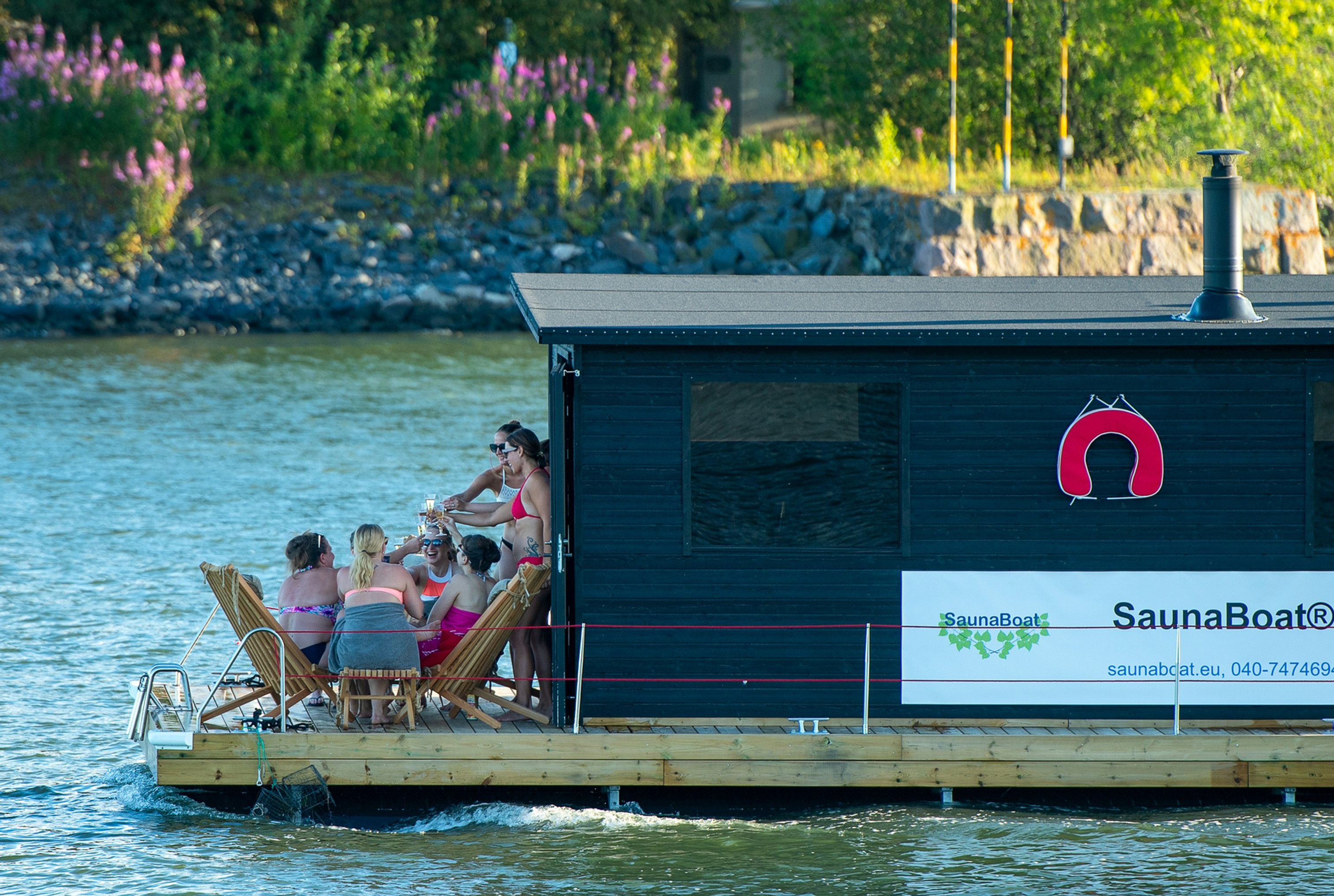
For an hour or two, you are not rushing anywhere. You are not expected to accomplish anything. You warm up, cool down, rest, and begin again. You move through the rounds in company, the world outside receding a little further each time.
You are voyaging home to gather.
Warmly,


Comments